
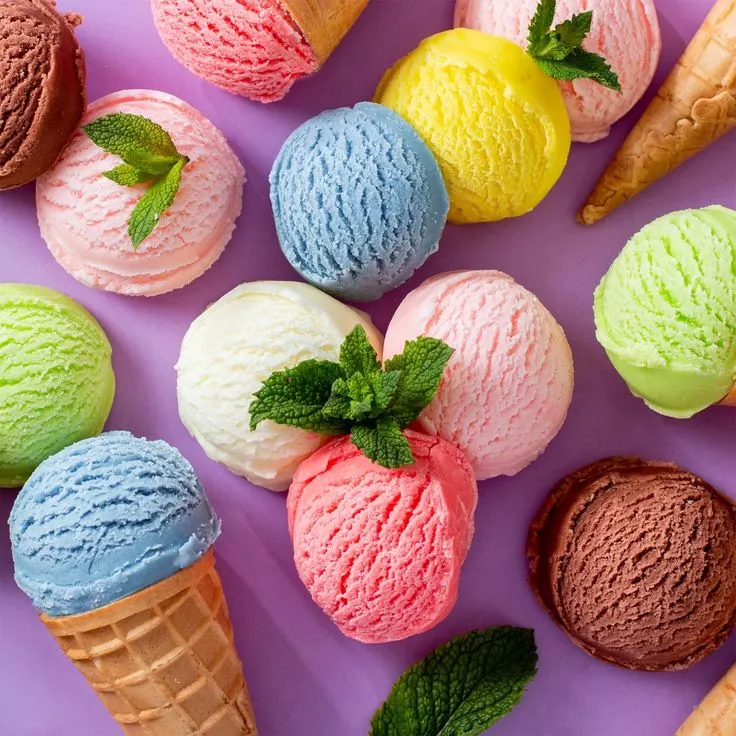
Choosing an Ice Cream Colour is not simply a matter of finding a shade that looks appealing in a cup. Ice cream contains fat, milk solids, sweeteners, stabilizers, and air, all of which can change how a color appears. FoodRGB offers natural color options for ice cream in water-soluble and oil-suspended forms, available as powders and liquids. That range gives developers room to match the color system to the formula instead of forcing one ingredient into every product. The finished mix should always guide the choice.
Fat and Water Change the Job
A dairy base and a frozen fruit base may need completely different color formats even when the target shade is identical. Water-soluble colors can work well where the formula allows easy dispersion, while oil-suspended systems may suit coatings, fillings, or products with more fat. FoodRGB lists several natural sources for ice cream applications, including beetroot, beta carotene, turmeric, annatto, paprika oleoresin, gardenia blue, and spirulina. The useful question is not which color is strongest, but which one blends cleanly into the actual product. That choice affects consistency during mixing.
Cold Storage Is Part of the Test
A fresh mix can tell a developer very little about how the product will look after freezing. Low temperatures, air incorporation, and the opacity of the frozen base may soften or shift the visible shade. Trials should therefore follow the real production route, including mixing, freezing, hardening, and storage. It also helps to check the same batch after several days rather than judging it immediately. A color that looks slightly strong before freezing may settle into the intended appearance once the ice cream is fully set.
Candy Brings Heat Into the Picture
Confectionery creates a different challenge because many products are cooked, cooled, coated, or repeatedly handled before packaging. A Natural Candy Color must fit those steps, not just the final shade. FoodRGB describes water-soluble colors for gummies, jelly, lollipops, and hard candies, while oil-soluble or oil-dispersible options are used for chocolate coatings and fillings. Heat exposure can be especially important in hard candy, where the color needs to tolerate high cooking temperatures without losing the appearance that the developer planned. This matters before a recipe reaches commercial scale.
Different Confections Need Different Systems
Gummies, chocolate, frosting, chewing gum, and hard candies all sit under the confectionery label, but their formulas are far from alike. A translucent gummy benefits from a color that disperses clearly in a water-based system. Chocolate has a different need because extra water can interfere with texture, making oil-compatible colors more practical. Frostings may accept powder or liquid forms more easily. Looking at the product category first prevents the common mistake of treating every candy application as if the same color format will behave equally well.
The First Batch Is Not the Final Answer
Bench trials are useful, but they should answer practical questions rather than simply produce a good-looking sample. Developers can compare two or three color levels, then run the most promising version through the actual process. For ice cream, that means checking the frozen product. For candy, it may mean watching the shade after cooking and cooling. Packaging should be included where possible, since light and storage can influence appearance over time. Small tests are cheaper than discovering a color problem after a full production run.
Color Choice Should Follow the Process
The most reliable way to select a natural color is to work backward from the finished product. Start with the desired appearance, then consider whether the formula is mostly water or fat, how much heat it receives, and how it will be stored. Solubility and physical form can then be matched to those conditions. This approach also makes scale-up easier because the color has already been tested under realistic conditions. A technically suitable shade is usually more valuable than a visually perfect sample that cannot survive production.
Conclusion
Ice cream and confectionery show why natural color work cannot be reduced to picking a shade from a chart. Frozen dairy products bring questions about fat, water, opacity, and cold storage, while candy can add heat, coating, and texture concerns. Manufacturers can use foodrgb.com to explore application-specific natural color options and technical support for both categories. The strongest choice is the one that fits the recipe, moves through production without creating new problems, and still gives the intended appearance when the product reaches the customer.
